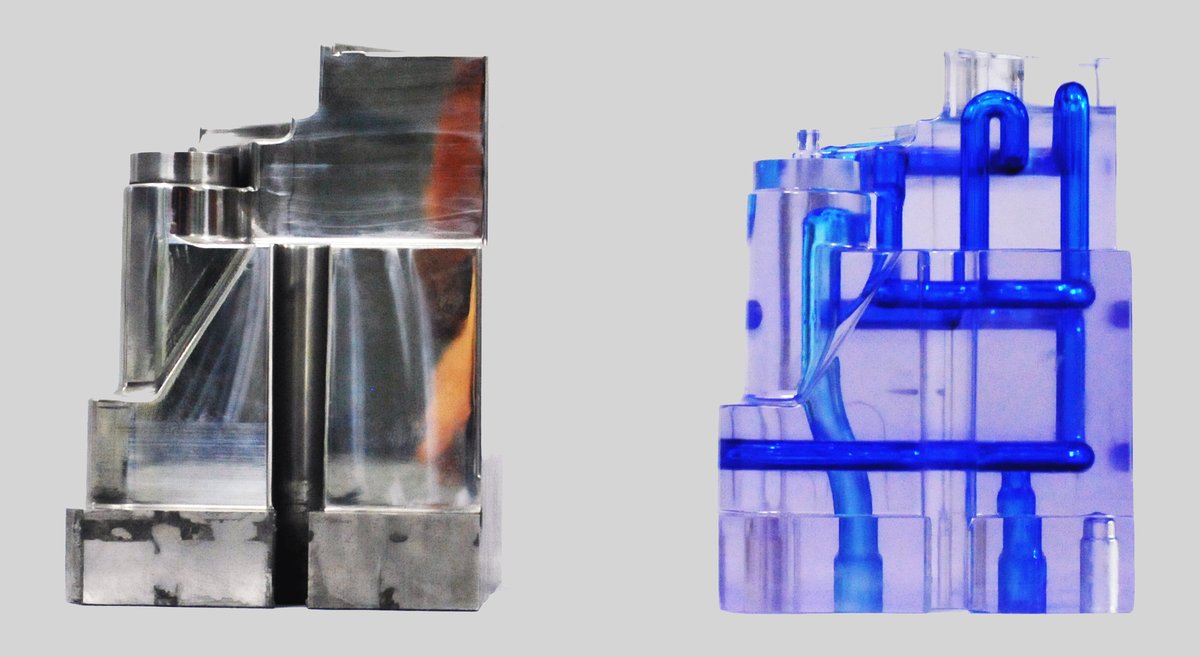
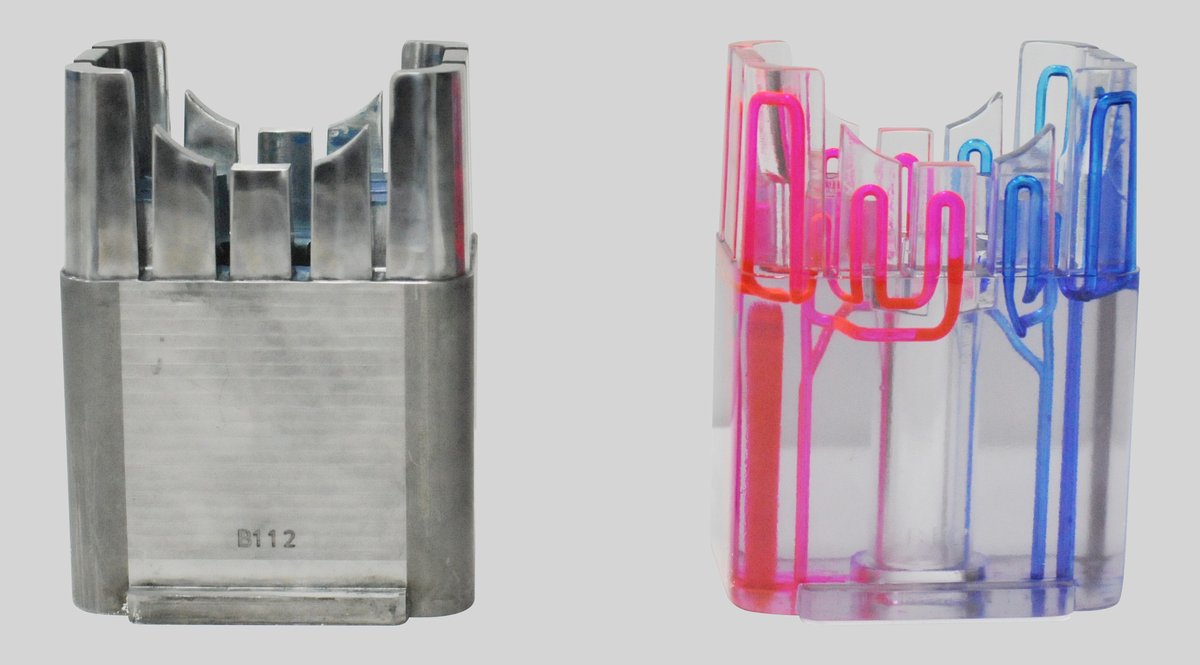
Moulds and conformal cooling inserts
Cooling follows the cavity instead of crossing it: shorter cycle time, differential shrinkage under control, fewer rejects. It is the fastest payback in injection moulding and die casting.
New design freedom, lightweighting and conformal channels: on the right component additive does not replace a machining step, it changes the design. These are the applications where metal and technical ceramics genuinely change the outcome, with real components as examples.
Additive manufacturing pays off when the geometry is worth more than the part: cooling channels that follow the surface, lattice structures, assemblies reduced to a single component, mass left only where it works. For simple parts at high volume, casting, die casting and machining remain more competitive.
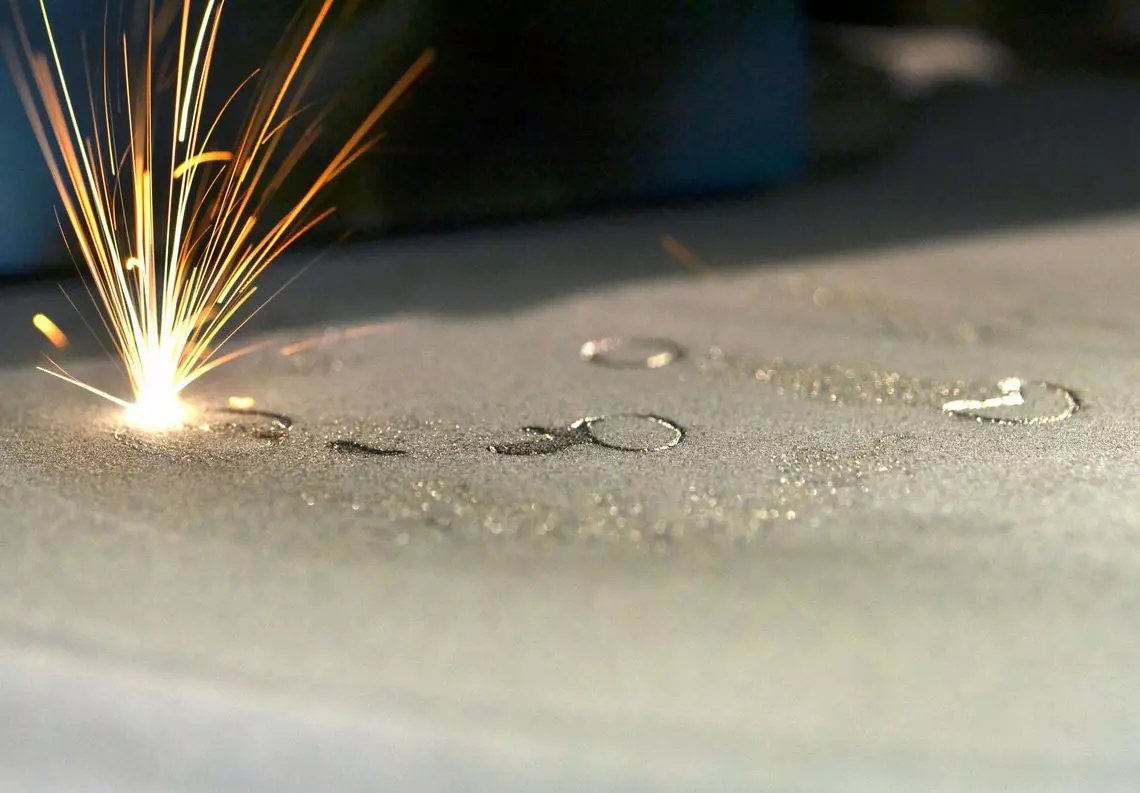
In metal the reference technologies are LPBF (laser powder bed fusion), for complex high-value parts from one to a thousand units, and binder jetting, which comes closest to series production.
In technical ceramics, printing — lithography/LCM, DLP, binder jetting — opens up geometries that pressing cannot deliver: alumina, zirconia, silicon nitride and carbide, calcium phosphates for medical use.
Bonora Technologies supports companies in choosing the process, redesigning the component and qualifying the supply chain.
These are the four reasons a part moves to additive. If it touches none of them, another technology is almost always the better answer.
Topology optimisation removes material where it does no work. On brackets, arms and moving parts the question is how much mass can go at equal stiffness, with knock-on effects on inertia, energy use and actuator sizing.
The channel follows the surface to be cooled instead of being a straight drilled hole closed with a plug. In tooling that means shorter cycles and less distortion; in thermal components, controlled gradients where hot spots used to sit.
An assembly of several parts, seals and screws becomes one component. Joints, leak paths, part numbers and assembly time disappear, and inspection gets simpler.
Lattice structures and triply periodic surfaces multiply exchange area within the same volume, or absorb energy in a programmed way. No other technology produces these geometries.
The application families where metal additive is already an industrial choice rather than an experiment.
Cooling follows the cavity instead of crossing it: shorter cycle time, differential shrinkage under control, fewer rejects. It is the fastest payback in injection moulding and die casting.
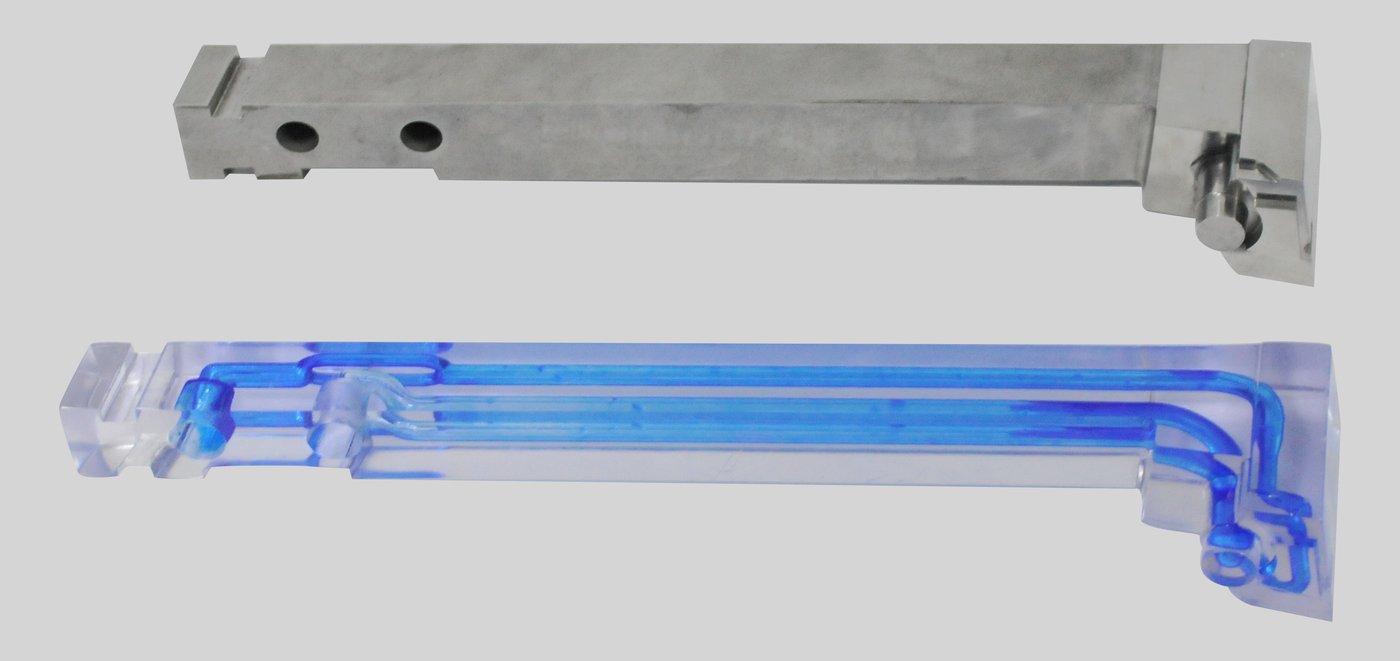
Even slender mould details can be cooled internally. Those are exactly the spots where heat builds up, the cycle stretches and cosmetic defects appear.
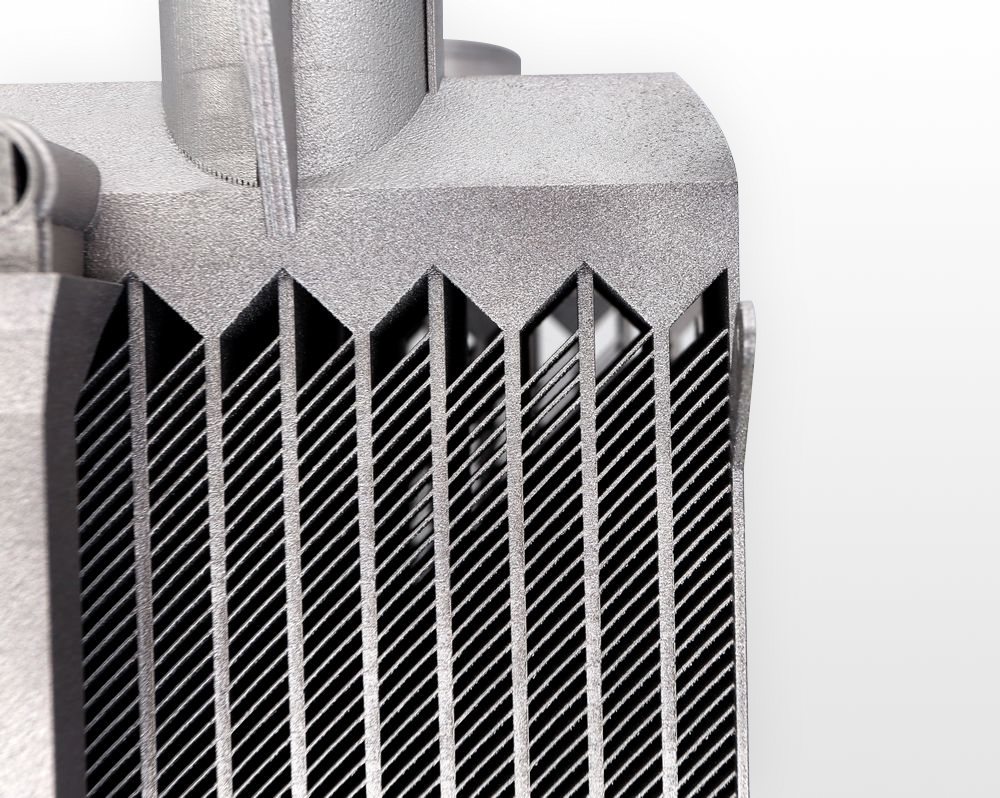
Very thin fins, counter-flow passages and internal surfaces no cutter can reach: more thermal power in the same envelope, or the same duty in a far smaller volume.
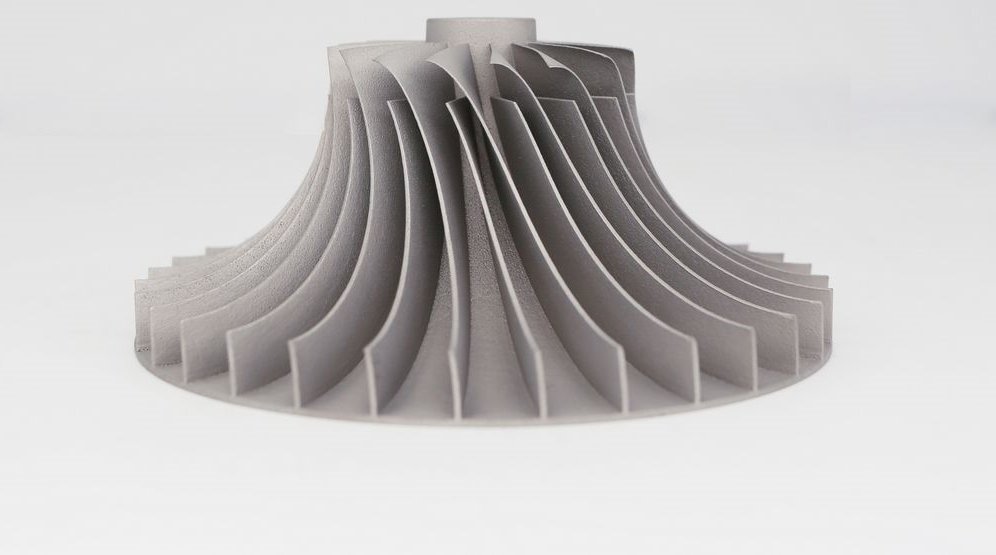
Doubly curved blades produced in one piece, with no electrodes and no welding. Prototyping moves from weeks to days and the aerodynamic profile can actually be iterated.
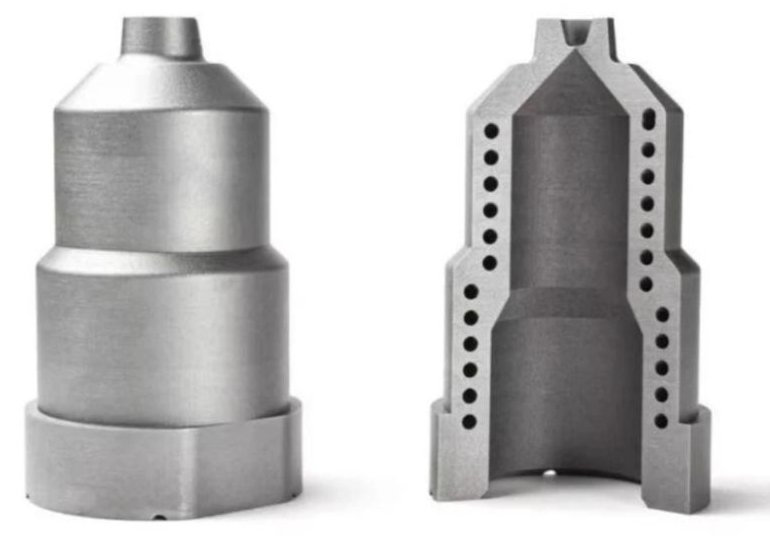
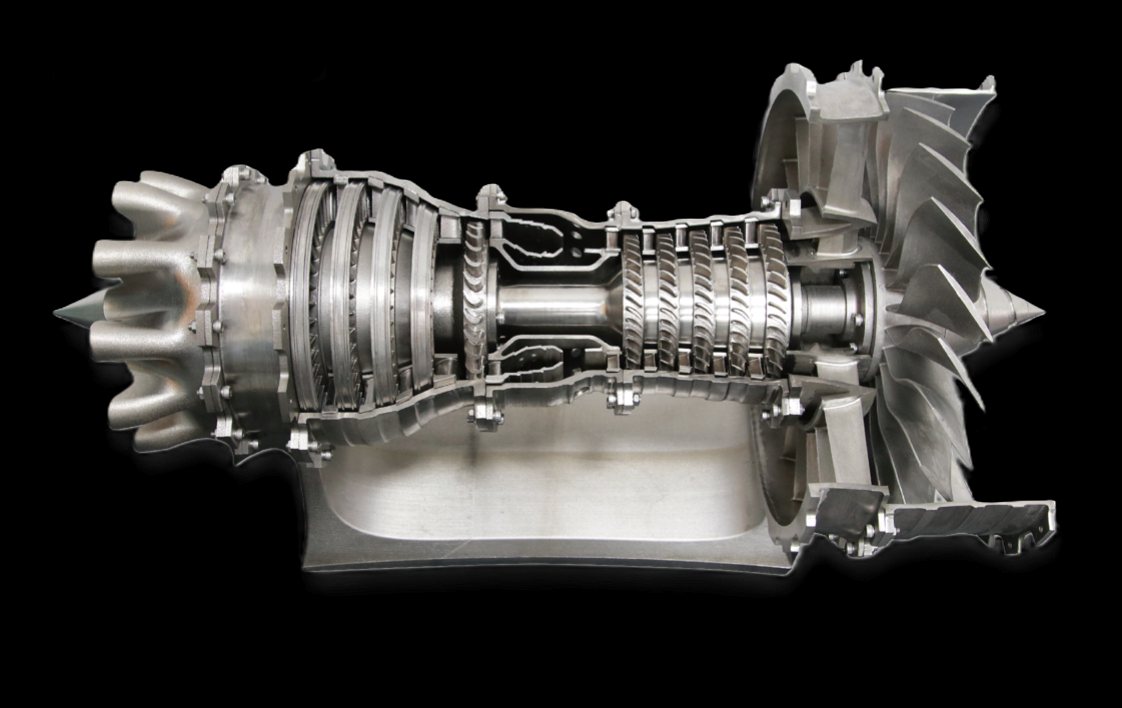
Mixing, cooling film and internal chambers integrated into a single body. The section shows holes and cavities that casting would require cores, joints and welds to obtain.
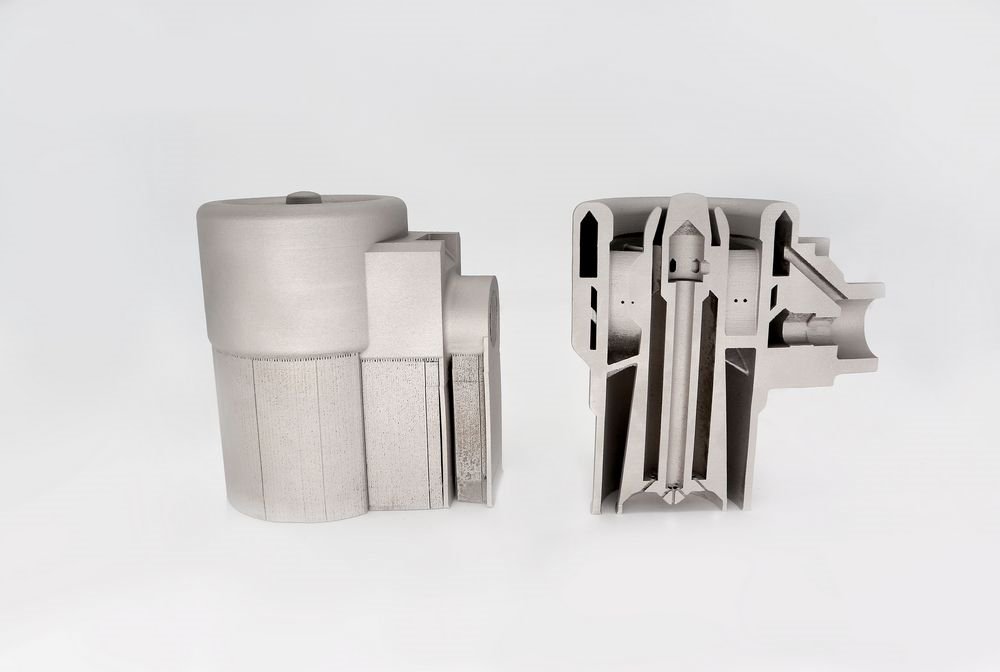
Curved ports with optimised cross-sections instead of orthogonal drillings closed with plugs: lower pressure drop, fewer leak paths, less weight and envelope.
A conformal insert is judged on three numbers: cycle time, reject rate and insert life. The first is what repays the investment, because cooling is the longest phase of the moulding cycle and the only one the channel geometry affects directly.
The calculation is done on the part, not on the technology: annual output, the value of one second of cycle time, the cost difference against a conventional insert. On high-volume articles payback arrives quickly; on small batches it rarely does. It is the first check we run, and the one that most often leads us to say no.
In turbomachinery groups, cutting the part count is worth as much as saving weight: every joint removed is one seal, one leak path, one machining operation and one inspection fewer. The benefit shows up in the cost of the assembled unit, not in the price of the single part.
It is also the case that carries the strictest constraints: material qualification, heat treatment, non-destructive testing and powder traceability. On these points the supply chain has to be chosen before the design, not after.
Printed by lithography, DLP or binder jetting and then sintered, technical ceramics take on geometries pressing cannot deliver.
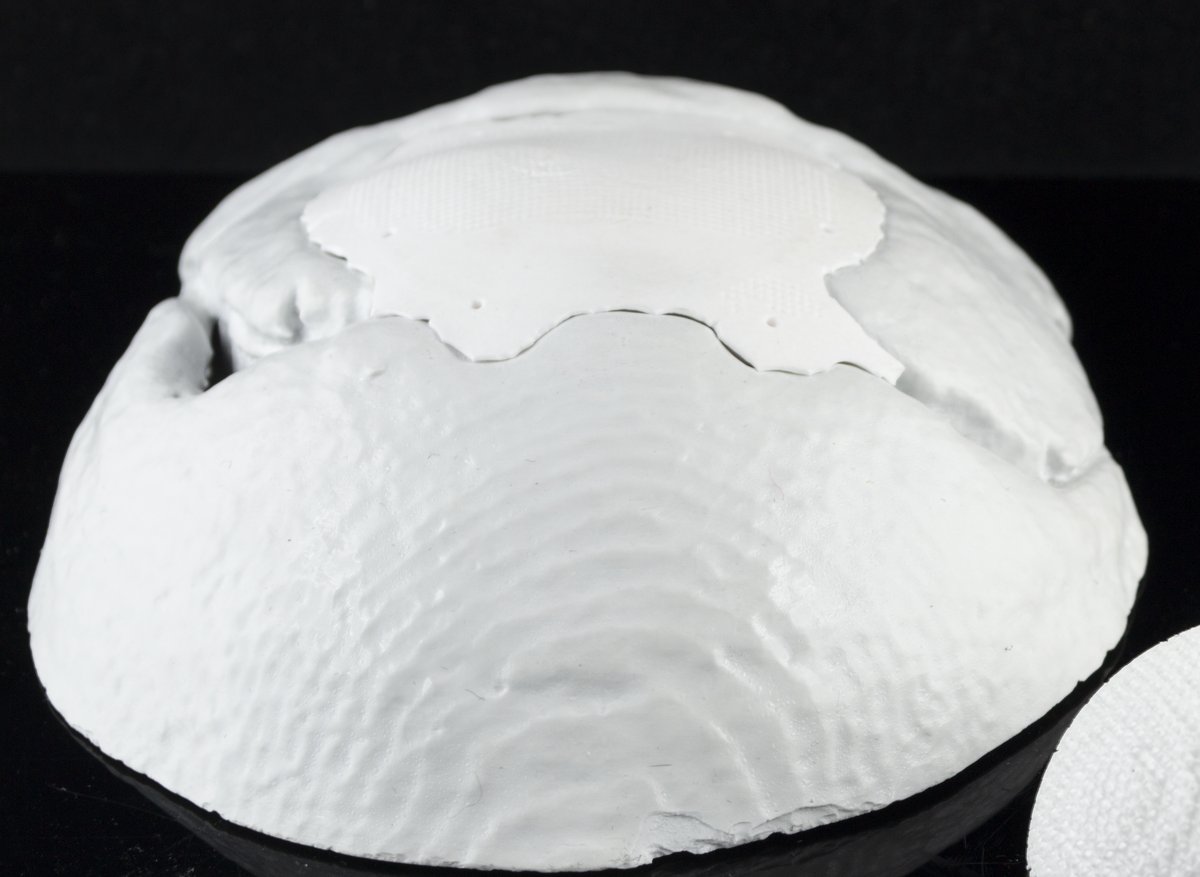
Cranial plates, dental elements and implants derived from the patient's diagnostic imaging. Alumina and zirconia are biocompatible, stable over time and free of imaging artefacts.
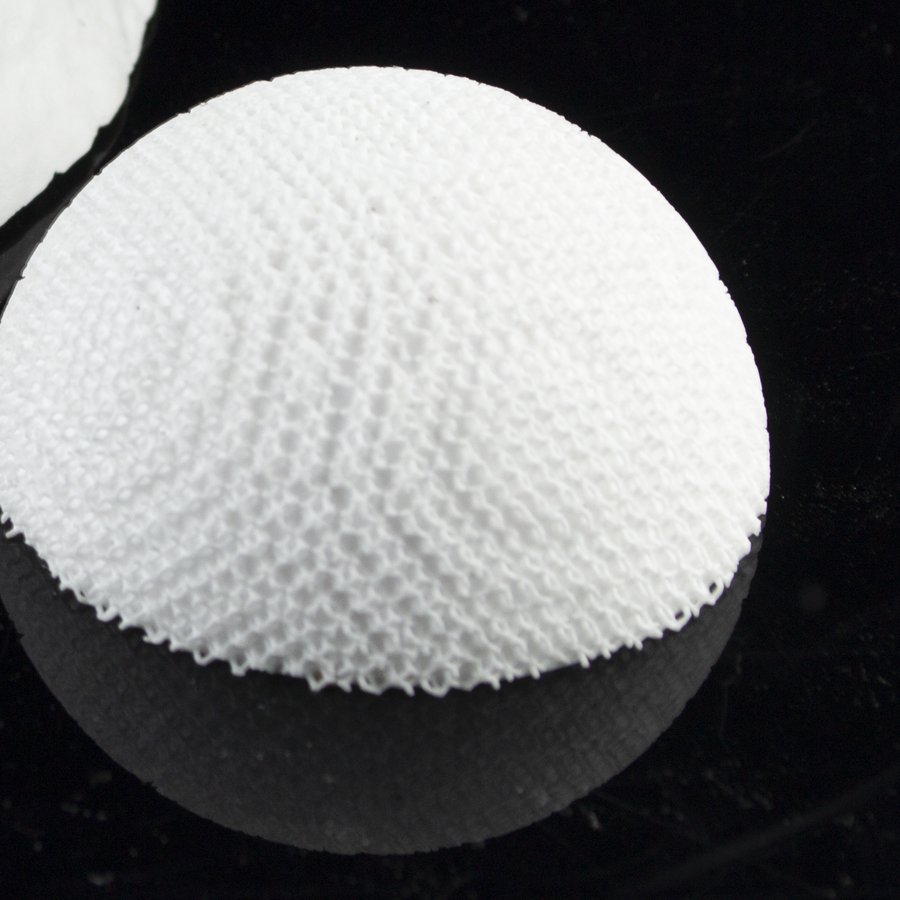
Open, interconnected porosity designed to guide tissue regrowth. With calcium phosphates the structure is resorbed as bone replaces it.
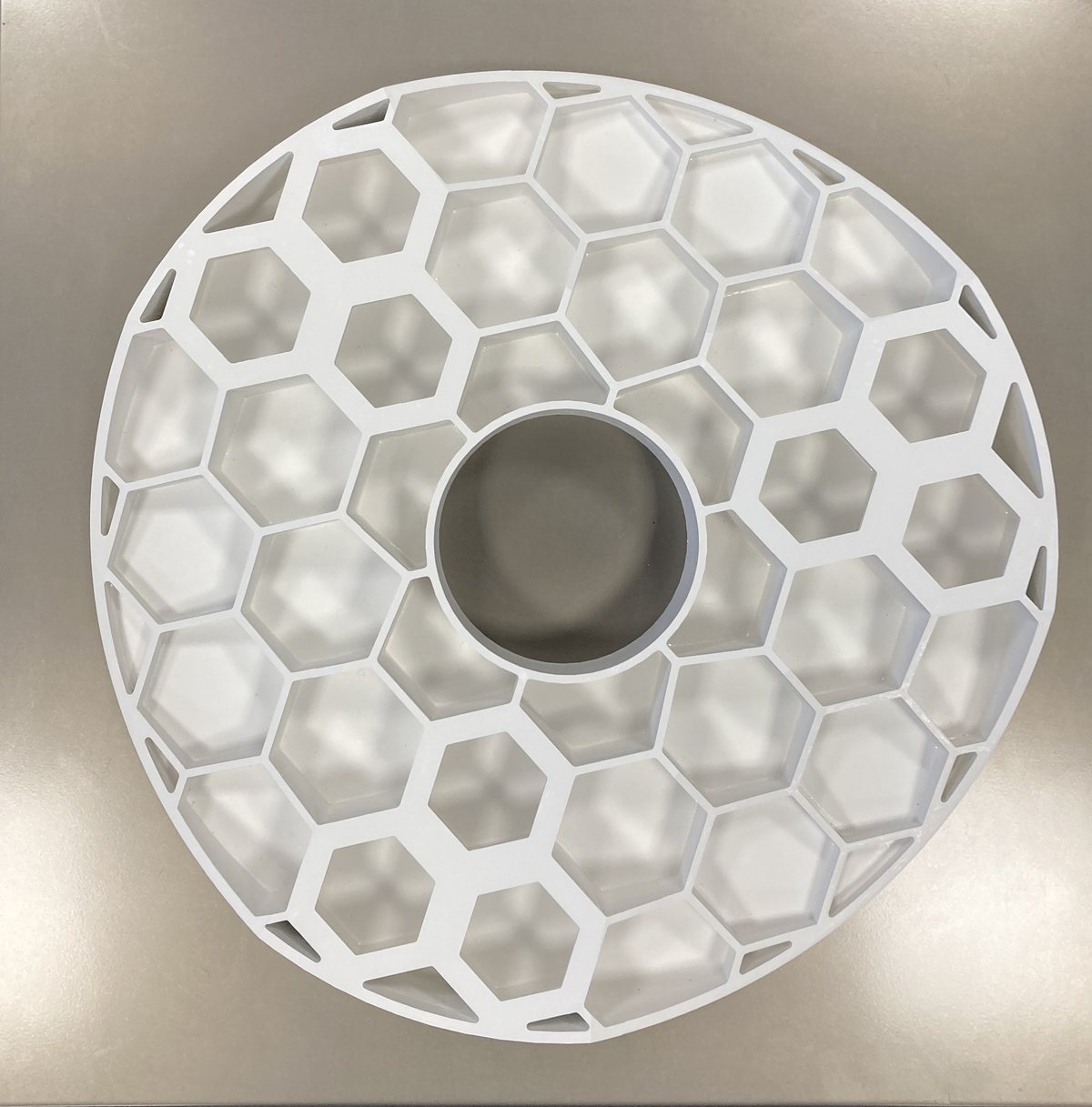
Honeycomb cells with channels designed around the real flow rather than a regular matrix: high specific surface with contained pressure drop, even at high temperature.
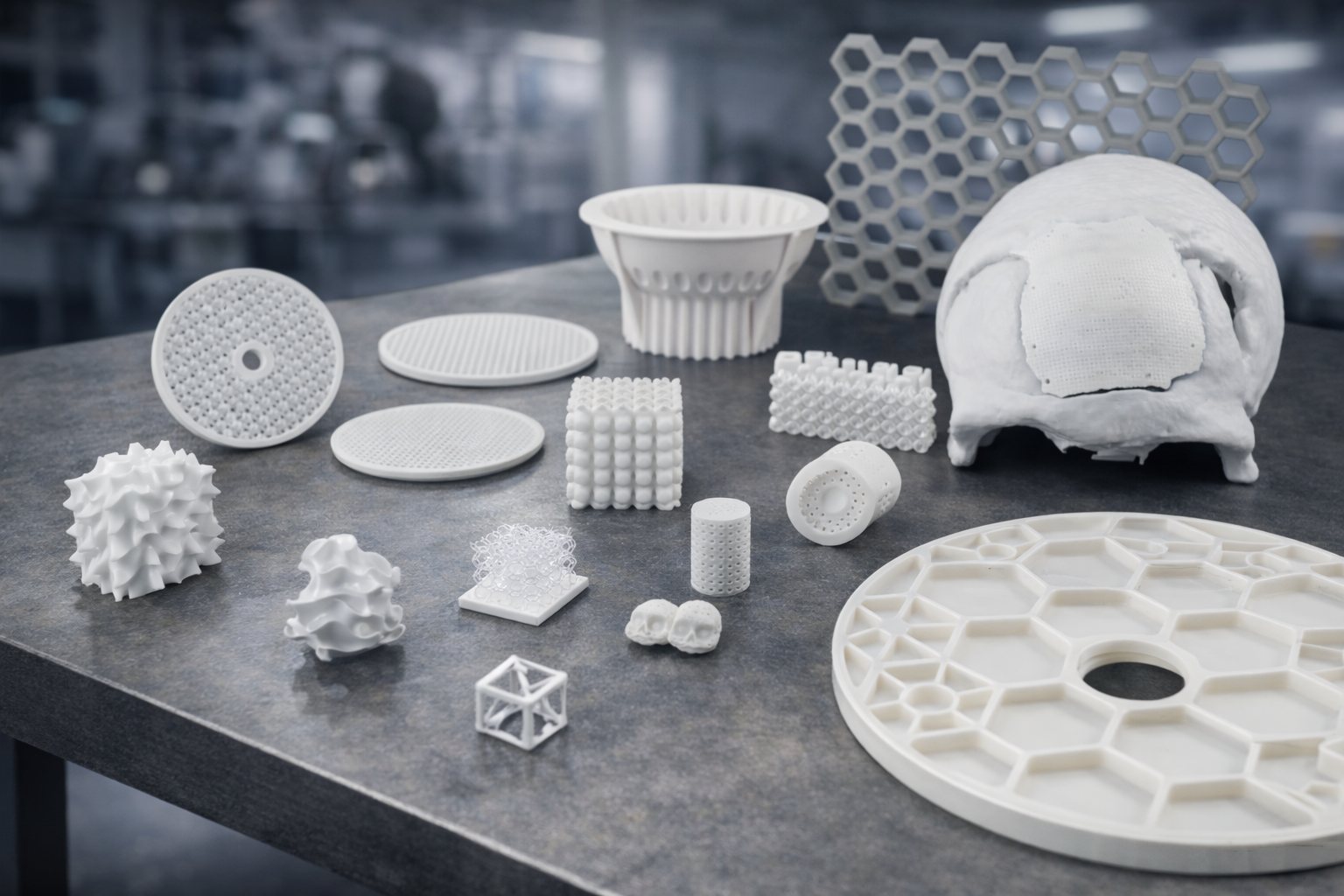
Burners, crucibles, insulators, nozzles and kiln furniture in alumina, zirconia, silicon nitride and carbide, without pressing dies and without the shape limits they impose.
Above the limits of superalloys, technical ceramics keep working: they hold shape and properties where metal distorts or oxidises. That is why they turn up in burners, kiln furniture and process chambers.
Hardness well above steels and inertness to acids, bases and molten metals. On abrasive nozzles, guides and parts in contact with slurries, service life is measured in multiples rather than percentages.
Dielectric insulation, transparency to radio waves and biocompatibility are properties of the material, not of the process: they open applications — power electronics, sensing, implants — where metal is ruled out from the start.
One constraint to design for from the start: the printed part is a green body that shrinks significantly during sintering. The shrinkage has to be compensated in the model, and it is why tight tolerances are obtained with a final grinding operation.
We start from the component portfolio, not from the machine. We look for parts that touch at least one of the four levers and that carry a known cost or problem: rejects, cycle time, downtime, lead time, inventory.
Build orientation, supports, minimum wall thickness, radii, stock left for final machining. Most of the finished part cost is decided here.
Build, heat treatment, machining and testing on the real part. This is where the numbers calculated on the model are confirmed or disproved.
Supplier selection and qualification, control plan, powder traceability, specification and steady-state part cost. Without this step the project stays a successful prototype.
When the geometry delivers value the other technologies cannot: a channel that follows the surface, an assembly reduced to one part, mass distributed only where needed, an exchange surface impossible to machine. If the part is simple and volumes are high, casting, die casting and machining remain cheaper. Additive is not a substitution technology: it is a redesign technology.
It depends on the load case and the assembly constraints, and it has to be verified by analysis on the real geometry. The largest gains come on parts originally designed for casting or machined from solid, where material is distributed for process reasons rather than structural ones. Mass savings matter most on moving parts, where they propagate to inertia, energy use and actuator sizing.
On high-volume articles they often do, because cooling is the longest phase of the moulding cycle and the only one the channel shape affects directly. The calculation needs three figures: annual output, the economic value of one second of cycle time, and the cost difference between a printed and a conventional insert. On small batches the payback rarely arrives.
Parts come off the machine with a roughness and accuracy that suit many functions, but not fits, seals and datum surfaces: those come from a final machining operation. A well-run additive project plans the machining stock and the fixturing datum from the outset.
The material and the final properties are the same: what changes is how the shape is created. Pressing forces geometries that can be released from a die; printing does not. That opens internal channels, designed porosity and irregular cells. The remaining constraint is sintering shrinkage, which must be compensated in the model.
In metal: titanium alloys, casting aluminium, nickel-based superalloys, stainless and tool steels, cobalt-chrome, copper and its alloys. In technical ceramics: alumina, zirconia, silicon nitride and carbide, calcium phosphates for medical use. Actual availability depends on the process and the supplier, and should be verified before the design is set.
Send us the 3D model, the annual volumes and the problem you want to solve: we will tell you whether additive makes sense — and, just as plainly, when it does not.
Let us look at your part →